
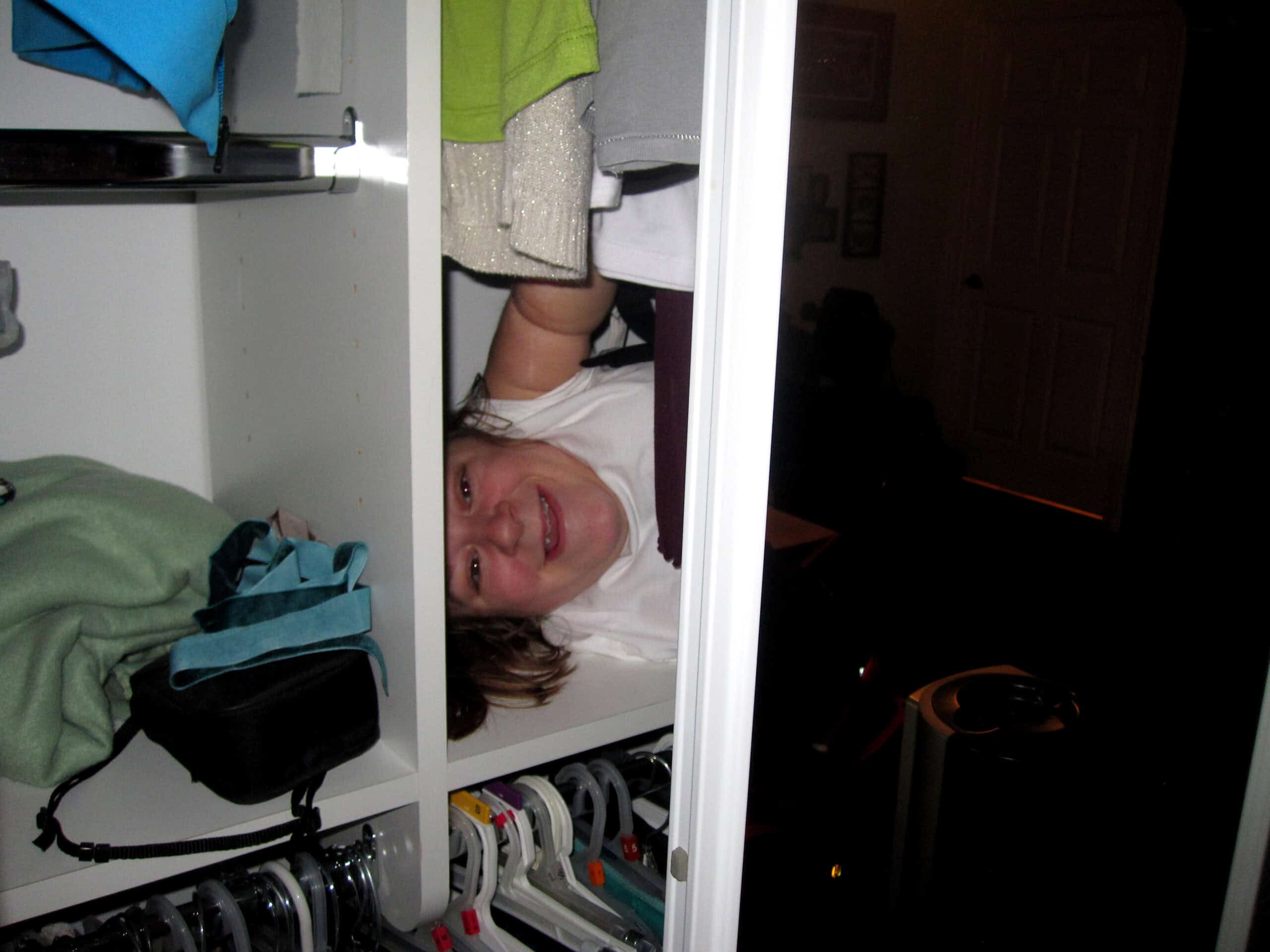
Growing up with Osteogenesis Imperfecta (OI) meant that I often had to do things a little differently than other kids. OI, sometimes called brittle bone disease, affects bone strength and mobility, which meant my family and friends had to be mindful of my safety. But one thing I never wanted was for my disability to prevent me from having fun—and thankfully, neither did my cousins.
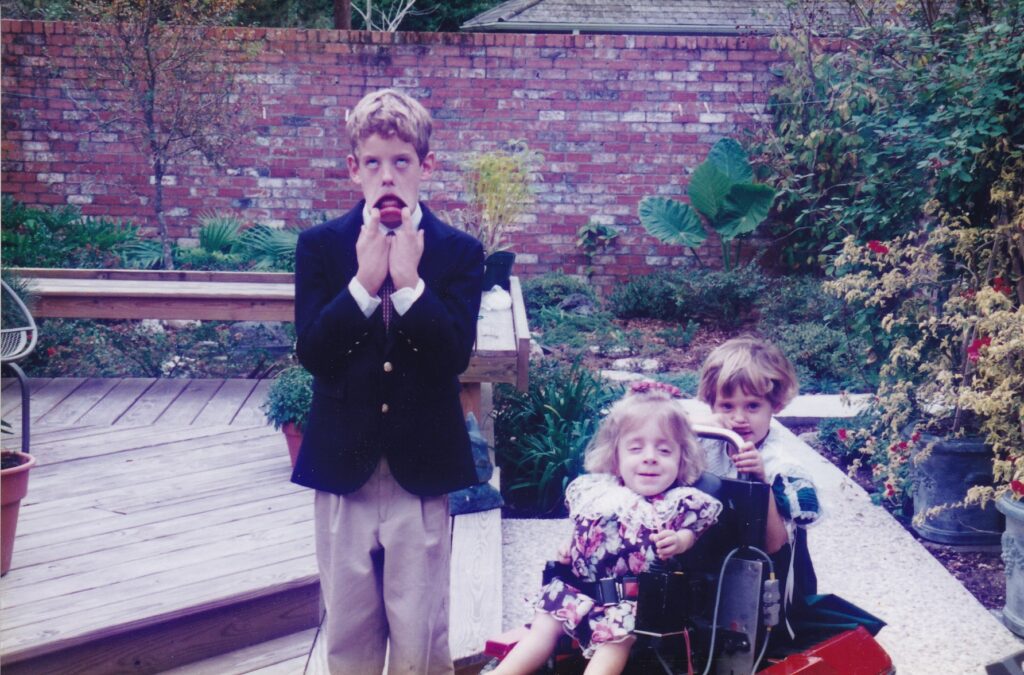
One of my favorite childhood memories comes from the summers I spent visiting my cousins in Texas. We were incredibly close growing up and still are today. My older cousin is four years older than me, and my younger cousin is two years younger. Whenever I stayed with them for a few weeks during the summer or over Christmas break, we were always coming up with creative ways to play together.
One game in particular became legendary in our family: our own custom version of hide-and-seek.
Because of my Osteogenesis Imperfecta, traditional hide-and-seek wasn’t always practical. I couldn’t climb into tight spaces on my own, and everyone understood that roughhousing or moving heavy objects around me could be dangerous. So my cousins invented a version that worked for all of us.
The rules were simple.
My older cousin would hide me, and my younger cousin would try to find me.
There were also strict safety rules that we put in place ourselves; our parental units were not involved. My younger cousin wasn’t allowed to open cabinets, move drawers, or shift furniture while searching. If she wanted to look somewhere that could potentially put me at risk, she had to ask my older cousin to check. Even as kids, we understood that protecting me from injury was important.
Looking back, it’s actually pretty impressive how seriously we took those rules.
Of course, that didn’t stop my older cousin from finding some very creative hiding spots.
One day, I spent nearly an hour hidden inside an underwear drawer. While that may sound funny now, it wasn’t exactly the most comfortable place to wait while being “lost.”
But the hiding spot that finally ended our game forever was much more memorable.
My older cousin was an athlete and exceptionally tall, even as a teenager. Today he’s about 6’5″, and back then he was already much bigger and stronger than everyone else. One afternoon, he decided the perfect hiding place would be on top of my aunt’s china cabinet.
And somehow, he got me up there. I don’t really remember, but I think there was a chair involved.
My younger cousin was still searching when my aunt walked into the room and spotted me.
The reaction was immediate.
“Oh my God, get her down!”
Then it quickly became:
“No, YOU don’t get her down!”
Followed by:
“Help!” (directed at my uncle)
As you can imagine, seeing a child with Osteogenesis Imperfecta perched on top of a china cabinet was not exactly reassuring.
Needless to say, that was pretty much the end of our hide-and-seek adventures…at least for that trip.
But honestly, I remember those games with nothing but laughter.
What stands out most isn’t the china cabinet or the underwear drawer. It’s the fact that my cousins never treated me like I couldn’t participate. Instead, they found ways to include me. They adapted the game, created safety rules, and made sure I could be part of the fun.
That’s something I think a lot of people misunderstand about disability inclusion.
Including someone with a disability doesn’t always mean doing exactly the same thing everyone else is doing. Sometimes it means being creative. Sometimes it means making adjustments. Sometimes it means inventing an entirely new version of hide-and-seek.
The goal isn’t to focus on what someone can’t do. It’s to find ways for everyone to participate safely and enjoy themselves.
As a child with Osteogenesis Imperfecta, I was fortunate to have family members who naturally understood that. They didn’t see me as fragile or different. They simply saw me as their cousin.
And for a kid growing up with a disability, that kind of acceptance means everything.
Even if it occasionally lands you on top of a china cabinet.